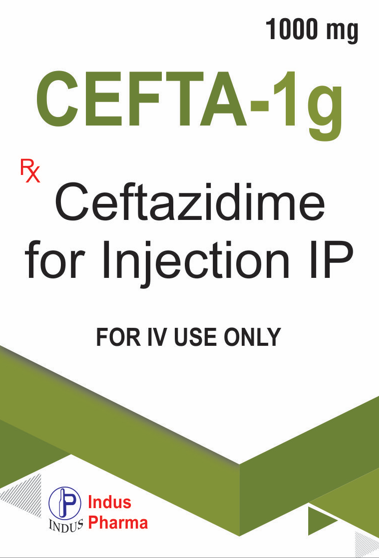
Benefits
Broad-spectrum antibacterial coverage
Highly effective against gram-negative bacteria
Useful in severe hospital-acquired infections
Rapid bactericidal activity
Suitable for use in ICU and critical care settings
Usage Instructions
Administer only under medical supervision.
Reconstitute the sterile powder with a suitable diluent before administration.
Given via intravenous injection, IV infusion, or intramuscular injection.
Dosage depends on severity of infection, patient age, weight, and kidney function.
Mechanism of Action
Ceftazidime acts by inhibiting bacterial cell wall synthesis through binding to penicillin-binding proteins (PBPs).
This leads to:
Disruption of bacterial cell wall formation
Weakening of bacterial cell structure
Rapid destruction and death of bacteria
Because of its strong bactericidal activity, Ceftazidime is widely used for severe and hospital-acquired infections.
Indications
Ceftazidime Injection is indicated for the treatment of infections such as:
Pneumonia
Sepsis
Urinary Tract Infection
Skin and soft tissue infections
Bone and joint infections
Intra-abdominal infections
Meningitis
It is especially effective against organisms such as:
Pseudomonas aeruginosa
Escherichia coli
Klebsiella pneumoniae
Side Effects
Common:
Injection site pain
Nausea
Diarrhea
Precautions
Use cautiously in patients with renal impairment
Dose adjustment may be required in kidney disease
Monitor for signs of allergic reactions
Long-term therapy may lead to superinfection
Contraindications
Hypersensitivity to ceftazidime or other cephalosporin antibiotics
Known severe allergy to beta-lactam antibiotics