Benefits
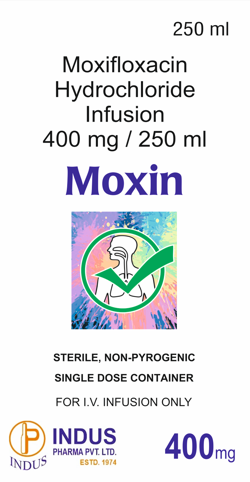
Moxifloxacin infusion provides several therapeutic benefits:
Effective against a wide range of bacteria
Provides rapid antibacterial action
Suitable for serious infections requiring hospital treatment
Helps eliminate infection-causing bacteria
Supports faster recovery from bacterial infections
Usage Instructions
Moxifloxacin infusion should be administered by a qualified healthcare professional.
It is given through intravenous (IV) infusion.
The usual dose is 400 mg once daily, depending on the patient’s condition.
Treatment duration depends on the type and severity of infection.
Do not self-administer without medical supervision.
Mechanism of Action
Moxifloxacin works by inhibiting bacterial DNA gyrase and topoisomerase IV, enzymes that are essential for bacterial DNA replication and repair. By blocking these enzymes, the drug prevents bacterial cells from multiplying, ultimately leading to bacterial cell death and elimination of infection.
Indications
Moxifloxacin infusion is indicated for the treatment of:
Respiratory tract infections
Community-acquired pneumonia
Skin and soft tissue infections
Intra-abdominal infections
Complicated bacterial infections
Severe bacterial infections requiring intravenous therapy
Side Effects
Some patients may experience side effects such as:
Nausea
Diarrhea
Headache
Dizziness
Injection site irritation
Allergic reactions (rare)
Seek medical attention if severe side effects occur.
Precautions
Use cautiously in patients with heart rhythm disorders.
Inform your doctor if you have kidney or liver disease.
Avoid use in patients with a history of tendon problems related to antibiotics.
Use during pregnancy or breastfeeding only if prescribed by a doctor.
Contraindications
Moxifloxacin should not be used in the following situations:
Hypersensitivity to moxifloxacin or other fluoroquinolone antibiotics
History of tendon disorders related to quinolone use
Patients with certain heart rhythm disorders (QT prolongation)
Known allergy to fluoroquinolone medications