Benefits
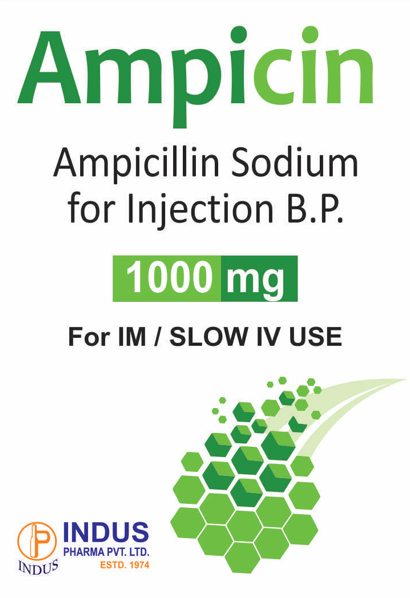
Ampicillin sodium injection provides several therapeutic benefits:
Effective against a wide range of bacterial infections
Rapid action when given intravenously or intramuscularly
Useful in severe and systemic infections
Helps eliminate infection-causing bacteria
Suitable for hospital and emergency treatments
Usage Instructions
This injection should be administered by a healthcare professional.
It may be given intravenously (IV) or intramuscularly (IM).
Follow the prescribed dosage and treatment duration.
Do not self-administer the injection without medical supervision.
Mechanism of Action
Ampicillin works by inhibiting the synthesis of bacterial cell walls. It binds to penicillin-binding proteins (PBPs) within the bacterial cell wall, preventing the formation of peptidoglycan, an essential structural component of bacterial cell walls. This leads to cell wall rupture and bacterial cell death.
Indications
Ampicillin Sodium Injection 1 g is indicated for:
Respiratory tract infections
Urinary tract infections (UTIs)
Gastrointestinal infections
Skin and soft tissue infections
Bacterial meningitis
Septicemia
Gynecological infections
Side Effects
Some patients may experience side effects such as:
Allergic reactions
Skin rash
Nausea or vomiting
Diarrhea
Injection site pain or swelling
Precautions
Inform your doctor if you have allergy to penicillin or cephalosporin antibiotics.
Use cautiously in patients with kidney disease.
Monitor for signs of severe allergic reactions during treatment.
Use during pregnancy or breastfeeding only if prescribed by a doctor.
Contraindications
This medicine should not be used in the following conditions:
Hypersensitivity to ampicillin or penicillin antibiotics
Allergy to beta-lactam antibiotics
History of severe allergic reactions to penicillin drugs