Benefits
1.Long-lasting analgesic effect
2.Effective regional and epidural anesthesia
3.Reduced motor block compared to some alternatives
4.Suitable for postoperative and labor pain management
5.USP-compliant quality assurance
Usage Instructions
1.Administered epidurally or via peripheral nerve block by trained anesthesia professionals
2.Dosage and concentration depend on procedure type, patient condition, and clinical protocol
3.Continuous patient monitoring is essential during administration
4.Resuscitation equipment should be readily available
Mechanism of Action
Ropivacaine works by blocking voltage-gated sodium channels in nerve fibers, preventing the transmission of nerve impulses. This results in temporary loss of sensation and pain relief in the targeted area.
Indications
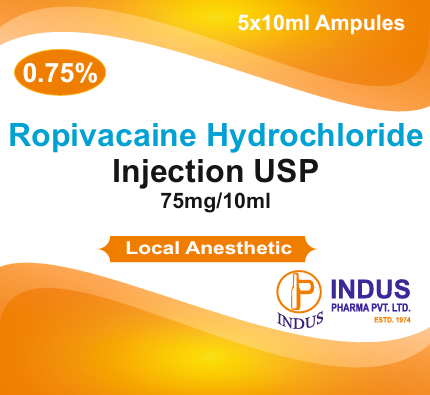
Ropivacaine Hydrochloride Injection USP 75 mg/10 mL is indicated for:
Regional anesthesia
Epidural anesthesia for surgical procedures
Postoperative pain management
Obstetric anesthesia (labor and delivery)
Peripheral nerve block anesthesia
Side Effects
Possible side effects may include:
Hypotension
Nausea or vomiting
Bradycardia
Headache
Dizziness
Rare: CNS or cardiovascular toxicity in case of accidental intravascular injection
Precautions
Administer only by experienced healthcare professionals trained in regional anesthesia
Monitor cardiovascular and neurological status during use
Use cautiously in patients with cardiac, hepatic, or renal impairment
Avoid intravascular injection; careful aspiration is recommended
Adjust dose in elderly or debilitated patients
Contraindications
Known hypersensitivity to ropivacaine or other amide-type local anesthetics
Intravenous regional anesthesia (Bier block)
Severe hypotension
Infection at the injection site
Uncontrolled cardiac conduction disorders