Benefits
Rapid onset of local anesthesia
Prolonged duration of action
Reduced intraoperative bleeding
Lower systemic toxicity risk due to slower absorption
BP-compliant sterile injectable formulation
Ideal for hospital and dental clinic use
Usage Instructions
Administered by trained healthcare professionals only
Intended for local infiltration or nerve block anesthesia
Dosage depends on procedure type and patient condition
Aspirate before injection to avoid intravascular administration
Continuous monitoring recommended in high-risk patients
Mechanism of Action
Lidocaine works by blocking sodium channels in nerve membranes, preventing nerve impulse conduction and producing local anesthesia.
Adrenaline (epinephrine) acts on alpha-adrenergic receptors, causing vasoconstriction. This reduces blood flow at the injection site, prolongs anesthetic effect, and minimizes systemic absorption.
Indications
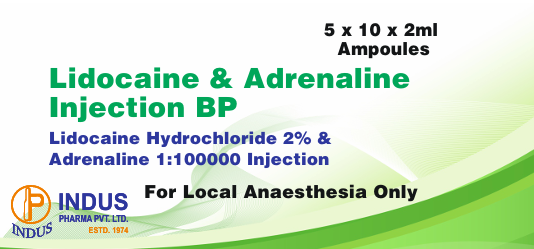
Lidocaine and Adrenaline Injection BP 20mg + 1mg/mL is indicated for:
Local anesthesia in minor surgical procedures
Dental procedures requiring local anesthesia
Dermatological procedures
Suturing and wound management
Regional nerve blocks
Minor orthopedic procedures
Side Effects
Possible side effects may include:
Local swelling or redness
Palpitations
Increased heart rate
Hypertension
Dizziness
Rare allergic reactions
CNS symptoms in case of overdose
Precautions
Use cautiously in patients with cardiovascular disease
Avoid use in areas with end-arterial blood supply
Monitor patients with hypertension or thyroid disorders
Use lowest effective dose
Strict aseptic technique required
Contraindications
Hypersensitivity to lidocaine or amide-type local anesthetics
Hypersensitivity to adrenaline (epinephrine)
Severe cardiac arrhythmias
Uncontrolled hypertension
Hyperthyroidism (use with caution)
Injection into end-arterial areas (e.g., fingers, toes, ears, nose, penis) where vasoconstriction may cause ischemia