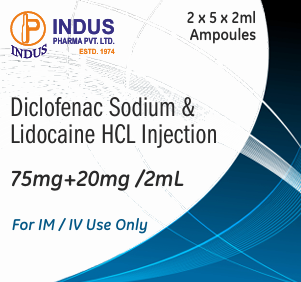
Benefits
Fast onset of analgesic action
Strong anti-inflammatory effect
Reduced injection site pain due to Lidocaine
Suitable for moderate to severe acute pain
Effective hospital-grade formulation
Usage Instructions
Administer by deep intramuscular injection only.
Given by healthcare professionals.
Use the lowest effective dose for the shortest duration.
Not recommended for intravenous use unless specifically formulated and directed
Mechanism of Action
Diclofenac inhibits COX-1 and COX-2 enzymes, reducing prostaglandin synthesis responsible for inflammation and pain.
Lidocaine blocks sodium channels in nerve membranes, preventing pain signal transmission at the injection site.
Indications
Indicated for short-term management of:
Acute musculoskeletal pain
Post-operative pain
Low back pain (Lumbago)
Renal colic
Acute gout
Rheumatoid arthritis
Osteoarthritis
Trauma-related pain
Side Effects
Common side effects:
Injection site pain (minimal due to Lidocaine)
Nausea
Dizziness
Gastric irritation
Precautions
Monitor patients with cardiovascular risk factors
Use cautiously in elderly patients
Avoid concurrent use with other NSAIDs
Caution in patients with liver or kidney dysfunction
Not recommended during third trimester of pregnancy
Contraindications
Hypersensitivity to Diclofenac, Lidocaine, or other NSAIDs
Active peptic ulcer or GI bleeding
Severe cardiac failure
Severe hepatic or renal impairment
History of NSAID-induced asthma
Known hypersensitivity to amide-type local anesthetics