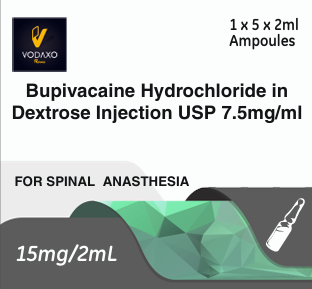
Local Anesthetic (Hyperbaric)

Bupivacaine Hydrochloride in Dextrose Injection USP 15mg/2mL

Local Anesthetic Spinal Anesthetic Regional Anesthesia Agent

Bupivacaine Hydrochloride in Dextrose Injection USP 15mg/2mL is a hyperbaric spinal anesthetic solution used to produce spinal anesthesia for surgical procedures. The addition of dextrose increases the density of the solution, allowing for better control of anesthetic spread within the cerebrospinal fluid during spinal administration. This formulation is widely used in lower abdominal, pelvic, urological, and lower limb surgeries, providing effective sensory and motor nerve blockade. Bupivacaine belongs to the amide class of local anesthetics and offers long-lasting anesthesia, making it suitable for procedures requiring sustained analgesia. Manufactured under strict pharmaceutical quality standards, this sterile injectable formulation ensures high purity, stability, and consistent anesthetic performance in clinical and hospital settings.

Key Information

Active Ingredient Bupivacaine HCl 7.5mg/mL + Dextrose
Dosage Form Injection
Pack Size 2mL Ampoule
Storage 15°C - 30°C

Benefits

Long-lasting spinal anesthesia

Predictable anesthetic spread due to hyperbaric formulation

Effective pain control during surgical procedures

Suitable for lower body surgeries

Widely used in hospital anesthesia practice

Usage Instructions

Administer only by trained anesthesiologists or healthcare professionals experienced in spinal anesthesia.

Inject into the subarachnoid space (intrathecal route) under strict sterile conditions.

Dosage depends on the surgical procedure, patient condition, and clinical judgment.

Continuous monitoring of blood pressure, heart rate, and respiratory status is recommended.

Mechanism of Action

Bupivacaine blocks voltage-gated sodium channels in nerve fibers, preventing the transmission of nerve impulses.

This results in:

Temporary loss of sensation

Motor nerve blockade

Regional anesthesia in the targeted spinal area

The presence of dextrose creates a hyperbaric solution, allowing anesthesiologists to control the distribution of the anesthetic within the spinal canal.

Indications

Bupivacaine Hydrochloride in Dextrose Injection is indicated for:

Spinal anesthesia for surgical procedures

Lower abdominal surgery

Pelvic surgery

Urological procedures

Orthopedic surgery of the lower limbs

Cesarean section and obstetric procedures

Side Effects

Common:

Hypotension

Nausea

Dizziness

Precautions

Continuous cardiovascular monitoring is required

Use cautiously in elderly or debilitated patients

Ensure availability of emergency resuscitation equipment

Avoid accidental intravascular injection

Careful dose calculation is necessary to prevent toxicity

Contraindications

Hypersensitivity to bupivacaine or other amide-type anesthetics

Severe hypotension or shock

Infection at the injection site

Severe spinal deformities or certain neurological disorders

Frequently Asked Questions

Find answers to common questions about Bupivacaine Hydrochloride in Dextrose Injection USP 15mg/2mL

1 What is Bupivacaine in Dextrose Injection used for?
It is used to provide spinal anesthesia for surgeries involving the lower body.
2 Why is dextrose added to this injection?
Dextrose makes the solution hyperbaric, allowing better control of anesthetic spread in the spinal fluid.
3 Who should administer this injection?
It should only be administered by trained anesthesiologists in clinical settings.
4 How long does spinal anesthesia from Bupivacaine last?
The anesthetic effect can last several hours depending on the dose and patient factors.
Product Image