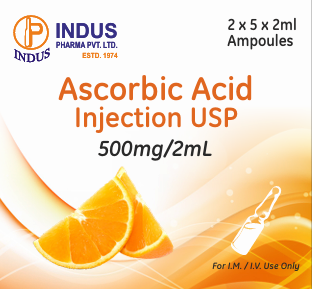
Benefits
Rapid correction of vitamin C deficiency
Supports immune health and antioxidant protection
Promotes faster wound healing
Useful when oral supplementation is not possible
Reliable injectable formulation for hospital care
Usage Instructions
Administer under the supervision of a healthcare professional.
May be given via intravenous (IV) or intramuscular (IM) injection.
Dosage depends on the patient’s age, nutritional status, and clinical condition.
Follow recommended medical guidelines for administration.
Mechanism of Action
Ascorbic acid acts as an essential cofactor in numerous enzymatic reactions in the body.
Its key functions include:
Promoting collagen formation for healthy skin, blood vessels, and tissues
Acting as a powerful antioxidant that protects cells from oxidative damage
Supporting immune system function
Enhancing iron absorption and metabolism
These effects help maintain tissue integrity and improve the body’s ability to recover from illness and injury.
Indications
Ascorbic Acid Injection is indicated for:
Treatment and prevention of Scurvy
Vitamin C deficiency when oral administration is not feasible
Support during severe infections and illness
Adjunct therapy in wound healing and burns
Nutritional supplementation in hospitalized patients
Supportive therapy in postoperative recovery
Side Effects
Common:
Mild pain or irritation at injection site
Nausea or stomach discomfort
Precautions
Use cautiously in patients with kidney disease
High doses may increase risk of oxalate formation
Monitor patients receiving long-term high-dose therapy
Use during pregnancy or breastfeeding only if prescribed
Contraindications
Hypersensitivity to ascorbic acid or formulation components
Patients with known oxalate kidney stones should use cautiously
Severe renal impairment may require monitoring