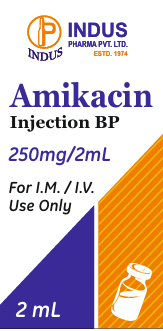
Benefits
Broad-spectrum antibacterial activity
Effective against resistant gram-negative bacteria
Rapid bactericidal action
Suitable for severe infections requiring injectable therapy
Widely used in hospitals and critical care settings
Usage Instructions
Administer only under medical supervision.
Given via intramuscular injection or slow intravenous infusion.
Dosage depends on patient weight, severity of infection, and renal function.
Regular monitoring of kidney function and hearing is recommended during prolonged therapy.
Mechanism of Action
Amikacin works by binding to the 30S ribosomal subunit of bacteria, interfering with protein synthesis.
This results in:
Disruption of bacterial protein production
Impairment of bacterial cellular function
Rapid bactericidal effect leading to elimination of infection
Because of its strong bactericidal activity, Amikacin is widely used in serious and hospital-acquired infections.
Indications
Amikacin Injection is indicated for the treatment of severe infections such as:
Sepsis
Pneumonia
Urinary Tract Infection
Bone and joint infections
Skin and soft tissue infections
Intra-abdominal infections
Post-operative infections
It is effective against bacteria including:
Pseudomonas aeruginosa
Escherichia coli
Klebsiella pneumoniae
Side Effects
Common:
Pain at injection site
Nausea or vomiting
Precautions
Monitor renal function during treatment
Prolonged therapy may cause nephrotoxicity or ototoxicity
Use cautiously in elderly patients
Avoid simultaneous use with other nephrotoxic medications when possible
Monitor drug levels during long-term treatment
Contraindications
Hypersensitivity to amikacin or other aminoglycoside antibiotics
Known allergy to aminoglycosides
Severe renal impairment without proper monitoring