Quality Assurance (QA) and Quality Control (QC) are two essential pillars of pharmaceutical manufacturing. While they work toward the same objective—ensuring safe, effective, and high-quality medicines—their roles, processes, and responsibilities are different. Learn the key differences between QA and QC and why both are vital for GMP compliance and patient safety.
Quality Assurance vs Quality Control: What's the Difference?
In the pharmaceutical industry, product quality is not optional—it's a legal and ethical responsibility. Every medicine manufactured must meet strict quality, safety, and efficacy standards before reaching patients.
To achieve this, pharmaceutical companies rely on two critical functions:
- Quality Assurance (QA)
- Quality Control (QC)
Although these terms are often used interchangeably, they serve different purposes. Understanding the difference between QA and QC helps organizations maintain compliance with WHO-GMP, cGMP, and international regulatory standards.
What is Quality Assurance (QA)?
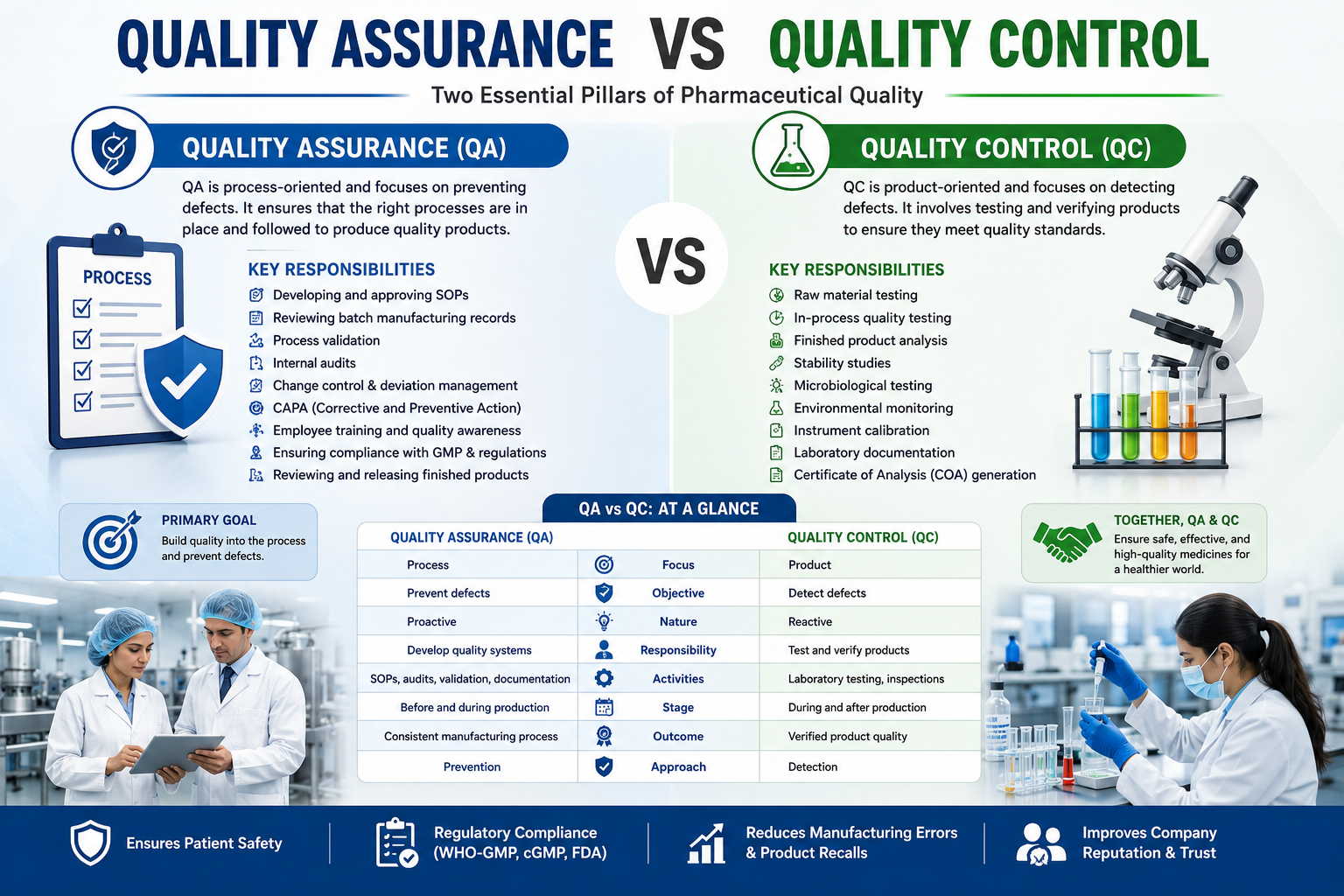
Quality Assurance (QA) is a process-oriented approach focused on preventing defects before they occur. It involves creating, implementing, and maintaining systems that ensure every stage of manufacturing follows predefined quality standards.
The primary goal of QA is to build quality into the manufacturing process rather than inspecting it afterward.
Responsibilities of the QA Department
- Preparing and approving Standard Operating Procedures (SOPs)
- Reviewing Batch Manufacturing Records (BMRs)
- Managing Document Management Systems (DMS)
- Conducting internal audits
- Validating manufacturing processes
- Handling deviations, CAPA, and change control
- Ensuring compliance with WHO-GMP and regulatory guidelines
- Employee training and quality awareness programs
- Reviewing and releasing finished products
QA ensures that every process is properly documented, validated, and consistently followed.
What is Quality Control (QC)?
Quality Control (QC) is a product-oriented function that focuses on testing and verifying the quality of raw materials, in-process samples, and finished pharmaceutical products.
QC identifies defects through laboratory testing before products are released to the market.
Responsibilities of the QC Department
- Raw material testing
- In-process quality testing
- Finished product analysis
- Stability studies
- Environmental monitoring
- Microbiological testing
- Instrument calibration
- Laboratory documentation
- Certificate of Analysis (COA) generation
QC confirms that products meet all required quality specifications before distribution.
Quality Assurance vs Quality Control: Comparison Table
| Feature | Quality Assurance (QA) | Quality Control (QC) |
|---|---|---|
| Focus | Process | Product |
| Objective | Prevent defects | Detect defects |
| Nature | Proactive | Reactive |
| Responsibility | Develop quality systems | Test products |
| Activities | SOPs, audits, validation, documentation | Laboratory testing, inspections |
| Stage | Before and during production | During and after production |
| Outcome | Consistent manufacturing process | Verified product quality |
| Approach | Prevention | Detection |
How QA and QC Work Together
Although QA and QC have different responsibilities, they are closely connected.
For example:
- QA approves manufacturing procedures.
- Production follows the approved SOPs.
- QC tests samples during production.
- QA reviews QC reports and manufacturing records.
- QA releases the batch only if all requirements are satisfied.
Without QA, manufacturing processes may not be properly controlled. Without QC, defective products could reach patients. Together, they form a complete pharmaceutical quality management system.
Why Both QA and QC Are Important
Maintaining high-quality standards offers several benefits:
Ensures Patient Safety
High-quality medicines protect patients from contamination, incorrect dosage, and ineffective treatment.
Regulatory Compliance
QA and QC help pharmaceutical manufacturers comply with:
- WHO-GMP Guidelines
- cGMP Regulations
- FDA Requirements
- EU GMP
- ISO Quality Standards
Reduces Manufacturing Errors
A strong quality system minimizes:
- Batch failures
- Product recalls
- Deviations
- Customer complaints
Improves Company Reputation
Consistent quality builds trust among healthcare professionals, distributors, and international customers.
QA and QC in Injectable Manufacturing
For manufacturers of sterile injectable products, QA and QC become even more critical because injectable medicines bypass the body's natural defense mechanisms.
Quality teams monitor:
- Sterility assurance
- Endotoxin testing
- Particulate matter testing
- Container closure integrity
- Cleanroom monitoring
- Environmental monitoring
- Aseptic process validation
- Media fill validation
Every step is designed to ensure patient safety and product reliability.
Technologies Supporting QA and QC
Modern pharmaceutical companies use advanced digital systems to improve quality management, including:
- Electronic Document Management Systems (DMS)
- Laboratory Information Management Systems (LIMS)
- Electronic Batch Records (EBR)
- Manufacturing Execution Systems (MES)
- CAPA Management Software
- Audit Management Systems
- Data Integrity Solutions
These technologies improve efficiency, traceability, compliance, and documentation accuracy.
Common Challenges in QA and QC
Some of the most common quality challenges include:
- Documentation errors
- Human errors during manufacturing
- Equipment calibration failures
- Data integrity issues
- Cross-contamination risks
- Regulatory inspection findings
- Delayed deviation investigations
- Inadequate employee training
Regular audits, employee training, and continuous process improvements help address these challenges effectively.
Best Practices for Strong Quality Management
To maintain a robust pharmaceutical quality system, organizations should:
- Follow current GMP guidelines
- Maintain accurate documentation
- Perform regular internal audits
- Validate manufacturing processes
- Train employees continuously
- Investigate deviations promptly
- Implement effective CAPA
- Monitor process performance regularly
- Promote a quality-focused culture
Conclusion
Quality Assurance and Quality Control are two distinct yet complementary functions that ensure pharmaceutical products meet the highest standards of quality, safety, and compliance.
Quality Assurance focuses on building reliable processes that prevent defects, while Quality Control verifies that products meet required specifications through rigorous testing.
Organizations that invest in strong QA and QC systems not only achieve regulatory compliance but also deliver safe, effective, and reliable medicines that improve patient health worldwide.