Planning to import pharmaceutical products from India? Discover the complete import process, required documents, regulatory requirements, and tips for choosing a trusted Indian pharmaceutical manufacturer. Learn why India is a leading global supplier of high-quality, WHO-GMP compliant medicines.
India has established itself as one of the world's leading
pharmaceutical manufacturing hubs, earning the title "Pharmacy of the
World." With a strong reputation for producing high-quality,
affordable generic medicines, sterile injectables, and specialty pharmaceutical
products, India exports medicines to over 200 countries worldwide.
Whether you are a pharmaceutical distributor, importer,
healthcare organization, hospital, government procurement agency, or
wholesaler, importing pharmaceutical products from India offers significant
advantages in terms of quality, affordability, and product availability.
This guide explains the complete pharmaceutical import
process, essential documentation, regulatory requirements, and key factors to
consider when selecting an Indian pharmaceutical manufacturing partner.
Why Import Pharmaceutical Products from India?
India is one of the largest exporters of generic medicines
and pharmaceutical formulations worldwide. Global buyers choose Indian
pharmaceutical manufacturers because they offer:
- High-quality
pharmaceutical products
- WHO-GMP
compliant manufacturing facilities
- Competitive
pricing
- Advanced
manufacturing technologies
- Extensive
product portfolio
- Reliable
export support
- International
regulatory compliance
- Strong
global supply chain
These advantages make India a preferred sourcing destination
for pharmaceutical imports.
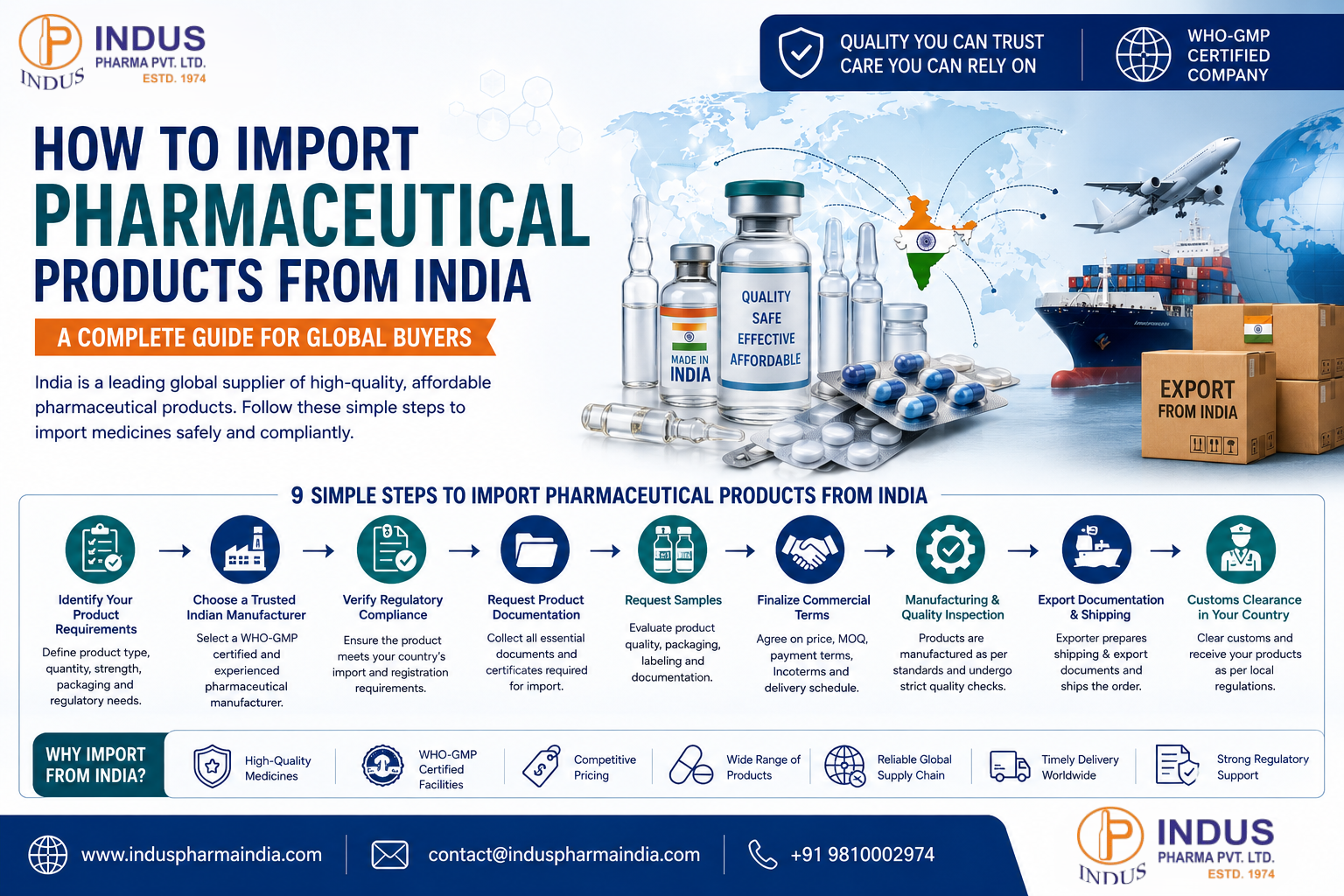
Step 1: Identify Your Pharmaceutical Product Requirements
Before selecting a supplier, clearly define your
requirements.
Consider the following:
- Product
category
- Therapeutic
segment
- Dosage
form
- Strength
and composition
- Packaging
requirements
- Country-specific
labeling
- Quantity
required
- Registration
status
Having clear specifications helps manufacturers provide
accurate quotations and regulatory guidance.
Step 2: Choose a Trusted Indian Pharmaceutical
Manufacturer
Selecting the right manufacturing partner is one of the most
important decisions.
Look for manufacturers with:
- WHO-GMP
Certified Facilities
- Strong
Quality Assurance Systems
- Export
Experience
- International
Certifications
- Modern
Manufacturing Plants
- Transparent
Documentation
- Responsive
Customer Support
Working with an experienced pharmaceutical exporter
minimizes regulatory risks and ensures consistent product quality.
Step 3: Verify Regulatory Compliance
Every country has its own pharmaceutical import regulations.
Before importing, verify:
- Product
registration requirements
- Import
license requirements
- Labeling
regulations
- Packaging
standards
- Shelf-life
requirements
- Stability
documentation
- Batch
release procedures
A reliable manufacturer will assist with regulatory
documentation and compliance.
Step 4: Request Product Documentation
International buyers typically require several technical and
regulatory documents before placing an order.
Common documents include:
- Certificate
of Pharmaceutical Product (CPP)
- Certificate
of Analysis (COA)
- Certificate
of Origin (COO)
- Product
Specifications
- Manufacturing
License
- Free
Sale Certificate (if applicable)
- Stability
Data
- Product
Dossier
- Safety
Data Sheets (where required)
Having complete documentation helps simplify customs
clearance and product registration.
Step 5: Request Samples
Before placing a commercial order, request product samples
for evaluation.
Sample testing allows buyers to assess:
- Product
quality
- Packaging
- Labeling
- Documentation
- Compatibility
with local regulations
This step helps build confidence before long-term
procurement.
Step 6: Finalize Commercial Terms
Once the product meets your requirements, finalize the
commercial agreement.
Discuss:
- Product
pricing
- Minimum
Order Quantity (MOQ)
- Payment
terms
- Delivery
schedule
- Shipping
method
- Insurance
- Packaging
specifications
- Incoterms
(FOB, CIF, EXW, etc.)
Clear agreements reduce misunderstandings during export.
Step 7: Manufacturing and Quality Inspection
After order confirmation, the manufacturer begins
production.
During manufacturing, quality teams perform:
- Raw
material testing
- In-process
quality checks
- Finished
product testing
- Packaging
inspection
- Batch
documentation review
These quality measures ensure every shipment meets
international standards.
Step 8: Export Documentation and Shipping
Before shipment, the exporter prepares the required export
documents.
Typical export documents include:
- Commercial
Invoice
- Packing
List
- Bill
of Lading or Air Waybill
- Certificate
of Origin
- Certificate
of Analysis
- Export
Declaration
- Insurance
Documents (if applicable)
Proper documentation helps ensure smooth customs clearance.
Step 9: Customs Clearance in Your Country
Upon arrival, customs authorities verify:
- Import
license
- Product
registration
- Shipment
documents
- Product
labeling
- Regulatory
compliance
Working with an experienced customs broker can help expedite
the clearance process.
Benefits of Importing Medicines from India
Importing pharmaceutical products from India offers numerous
advantages.
Cost-Effective Medicines
Indian manufacturers produce high-quality medicines at
competitive prices, helping buyers reduce procurement costs.
Extensive Product Portfolio
Indian pharmaceutical companies manufacture:
- Tablets
- Capsules
- Syrups
- Sterile
Injectables
- Antibiotics
- Oncology
Medicines
- Critical
Care Products
- Cardiovascular
Medicines
- Nutraceuticals
Reliable Global Supply
Indian exporters have established logistics networks that
support timely deliveries across international markets.
Strong Manufacturing Standards
Modern manufacturing facilities follow internationally
recognized quality systems and Good Manufacturing Practices (GMP).
Common Challenges and How to Overcome Them
Although importing medicines is straightforward with the
right partner, buyers should be aware of potential challenges.
Challenges include:
- Product
registration timelines
- Regulatory
changes
- Shipping
delays
- Customs
procedures
- Currency
fluctuations
Partnering with an experienced pharmaceutical exporter
significantly reduces these risks.
Why Choose Indus Pharma Pvt. Ltd.?
At Indus Pharma Pvt. Ltd., we are committed to
supplying high-quality pharmaceutical products to global healthcare markets.
Our strengths include:
- WHO-GMP
compliant manufacturing
- Advanced
quality control systems
- Wide
range of pharmaceutical formulations
- Reliable
export documentation support
- Competitive
pricing
- Timely
global deliveries
- Customer-focused
service
- Long-term
business partnerships
We work closely with pharmaceutical importers, distributors,
hospitals, and healthcare organizations to deliver safe, effective, and
affordable medicines worldwide.
Conclusion
Importing pharmaceutical products from India is a strategic
choice for businesses seeking reliable, affordable, and high-quality medicines.
By choosing a trusted pharmaceutical manufacturer, understanding regulatory
requirements, and ensuring proper documentation, international buyers can build
a dependable supply chain for long-term success.
As a trusted pharmaceutical exporter, Indus Pharma Pvt.
Ltd. is dedicated to supporting global healthcare by delivering quality
pharmaceutical products that meet international standards and customer
expectations.