Discover how Artificial Intelligence (AI) is revolutionizing pharmaceutical manufacturing and drug development in 2026. Learn how AI improves drug discovery, quality control, production efficiency, regulatory compliance, and global pharmaceutical innovation.
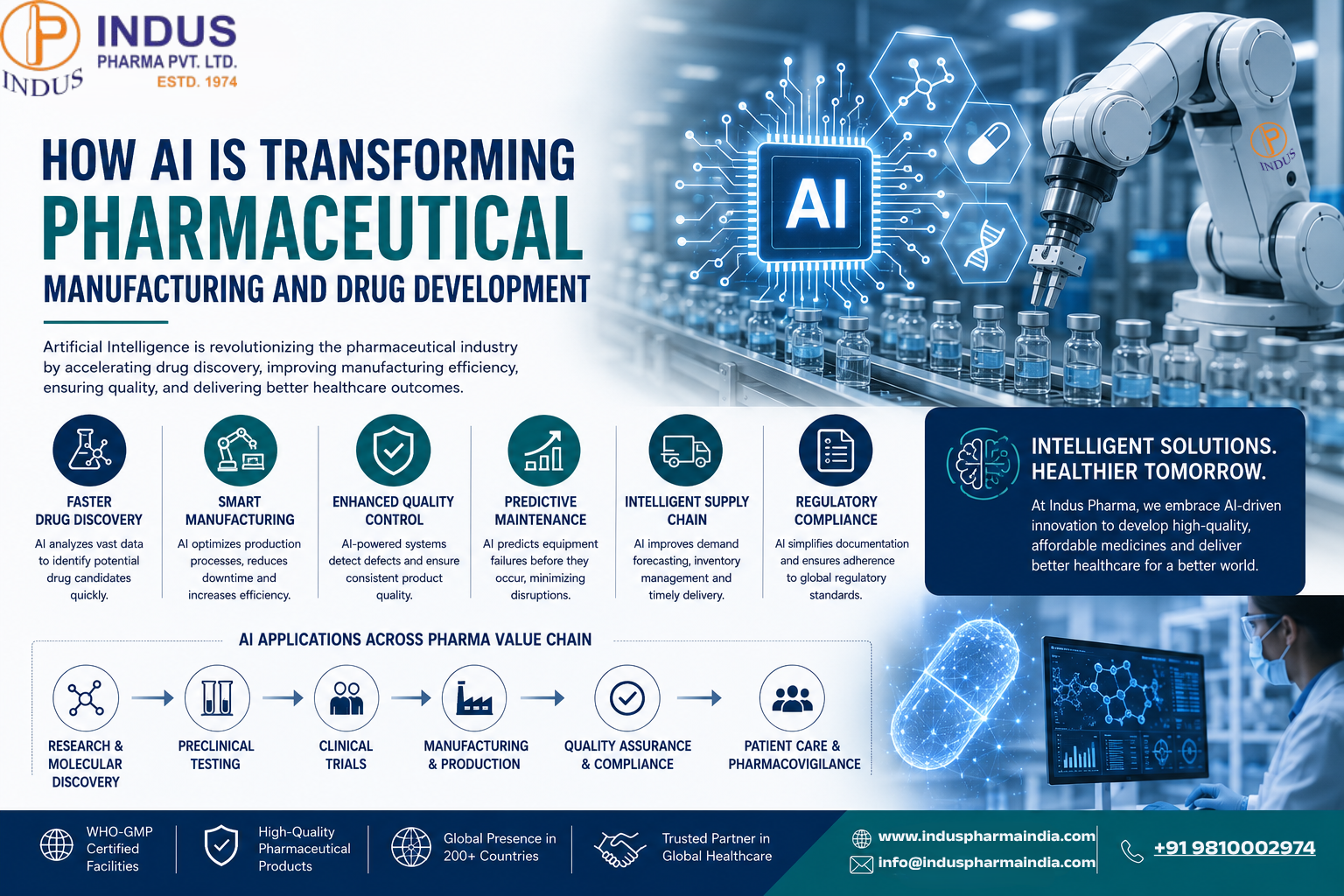
Artificial Intelligence (AI) is reshaping industries worldwide, and the pharmaceutical sector is among the biggest beneficiaries of this technological revolution. From accelerating drug discovery to improving manufacturing efficiency and ensuring better quality control, AI is transforming every stage of the pharmaceutical value chain.
As healthcare demands continue to rise globally, pharmaceutical manufacturers are embracing AI-powered solutions to reduce costs, improve accuracy, enhance regulatory compliance, and deliver life-saving medicines faster than ever before.
At Indus Pharma Pvt. Ltd., we recognize the growing importance of innovation and digital transformation in delivering high-quality pharmaceutical products to international markets.
What Is AI in Pharmaceutical Manufacturing?
Artificial Intelligence (AI) refers to computer systems capable of analyzing data, learning from patterns, and making intelligent decisions with minimal human intervention.
In pharmaceutical manufacturing, AI helps automate complex processes such as:
Drug discovery
Manufacturing optimization
Quality control
Predictive maintenance
Supply chain management
Regulatory documentation
Clinical research
Inventory forecasting
By integrating AI technologies, pharmaceutical companies can improve productivity while maintaining strict quality standards.
How AI Is Revolutionizing Drug Discovery
Traditional drug discovery often requires years of research and billions of dollars in investment. AI dramatically reduces this timeline by analyzing massive datasets in a fraction of the time.
AI assists researchers by:
Identifying promising drug molecules
Predicting drug interactions
Simulating clinical outcomes
Optimizing molecular structures
Accelerating vaccine research
Improving precision medicine
These capabilities enable pharmaceutical companies to bring innovative therapies to patients more quickly.
AI in Pharmaceutical Manufacturing
Modern pharmaceutical manufacturing relies heavily on precision, consistency, and compliance. AI enhances production through intelligent automation.
Key applications include:
Smart Manufacturing
AI monitors production lines in real time to detect inefficiencies and optimize manufacturing processes.
Predictive Maintenance
AI predicts equipment failures before they occur, reducing downtime and maintenance costs.
Automated Quality Control
Computer vision systems inspect tablets, capsules, injectables, and packaging with exceptional accuracy, minimizing human error.
Process Optimization
AI continuously analyzes production data to improve yield, reduce waste, and ensure batch consistency.
AI Enhances Quality Assurance and Regulatory Compliance
Quality assurance is one of the most critical aspects of pharmaceutical manufacturing.
AI helps manufacturers:
Detect product defects
Monitor environmental conditions
Validate manufacturing processes
Maintain electronic batch records
Ensure data integrity
Generate compliance reports
These capabilities support compliance with international regulatory standards such as WHO-GMP and Good Manufacturing Practices (GMP).
AI in Supply Chain and Inventory Management
Global pharmaceutical supply chains have become increasingly complex.
AI enables manufacturers to:
Forecast product demand
Optimize inventory levels
Improve warehouse management
Reduce stock shortages
Predict shipping delays
Improve procurement planning
A smarter supply chain ensures uninterrupted access to essential medicines worldwide.
AI in Personalized Medicine
One of the most exciting developments is AI's contribution to personalized healthcare.
AI analyzes patient data, genetics, and treatment history to help researchers develop therapies tailored to individual patients.
This approach improves treatment effectiveness while reducing adverse effects.
Benefits of AI in the Pharmaceutical Industry
The adoption of Artificial Intelligence provides numerous advantages.
Faster Drug Development
AI significantly reduces research timelines by automating data analysis.
Improved Product Quality
Continuous monitoring improves manufacturing consistency and reduces defects.
Reduced Manufacturing Costs
Automation lowers operational expenses while increasing production efficiency.
Better Decision Making
AI provides real-time insights that help manufacturers optimize operations.
Enhanced Patient Safety
AI improves pharmacovigilance by identifying potential safety issues earlier.
Stronger Regulatory Compliance
Automated documentation reduces compliance risks and supports global regulatory requirements.
Challenges of AI Adoption
Although AI offers remarkable opportunities, pharmaceutical companies must address several challenges:
Data privacy and cybersecurity
High implementation costs
Integration with legacy systems
Regulatory validation
Skilled workforce requirements
Ethical use of AI
Companies that successfully manage these challenges will gain a competitive advantage.
The Future of AI in Pharmaceuticals
The future of pharmaceutical manufacturing will be driven by intelligent technologies.
Emerging innovations include:
AI-powered robotic laboratories
Digital twins for manufacturing
Autonomous production facilities
Machine learning for clinical trials
AI-assisted regulatory submissions
Predictive healthcare analytics
Smart pharmaceutical factories
As these technologies mature, pharmaceutical manufacturing will become faster, safer, and more efficient.
Why Innovation Matters at Indus Pharma Pvt. Ltd.
At Indus Pharma Pvt. Ltd., we believe innovation is essential for delivering safe, effective, and high-quality pharmaceutical products.
Our commitment includes:
Advanced manufacturing technologies
Stringent quality assurance
WHO-GMP compliant production
Continuous process improvement
Global export excellence
Customer-focused pharmaceutical solutions
By embracing technological advancements and industry best practices, we continue to strengthen our position as a trusted pharmaceutical manufacturing and export partner.
Conclusion
Artificial Intelligence is transforming pharmaceutical manufacturing and drug development by making processes faster, smarter, and more efficient. From AI-powered drug discovery to intelligent manufacturing, predictive maintenance, and quality assurance, the technology is helping pharmaceutical companies meet growing global healthcare demands.
As the pharmaceutical industry continues its digital transformation, organizations that embrace AI responsibly will be better equipped to deliver innovative, affordable, and high-quality medicines to patients worldwide.
At Indus Pharma Pvt. Ltd., we remain committed to innovation, quality, and excellence as we continue supporting global healthcare through advanced pharmaceutical manufacturing solutions.