Learn everything about WHO GMP Guidelines for pharmaceutical companies, including quality control, documentation, manufacturing standards, validation, hygiene, and regulatory compliance. Discover how Indus Pharma Pvt. Ltd. follows international pharmaceutical manufacturing standards to ensure safe, effective, and high-quality medicines for global healthcare markets.
Introduction to WHO GMP Guidelines
The pharmaceutical industry is one of the most highly regulated industries in the world. Medicines directly impact human health, which is why maintaining strict manufacturing standards is essential. One of the most important global standards followed by pharmaceutical companies is WHO GMP (World Health Organization Good Manufacturing Practices).
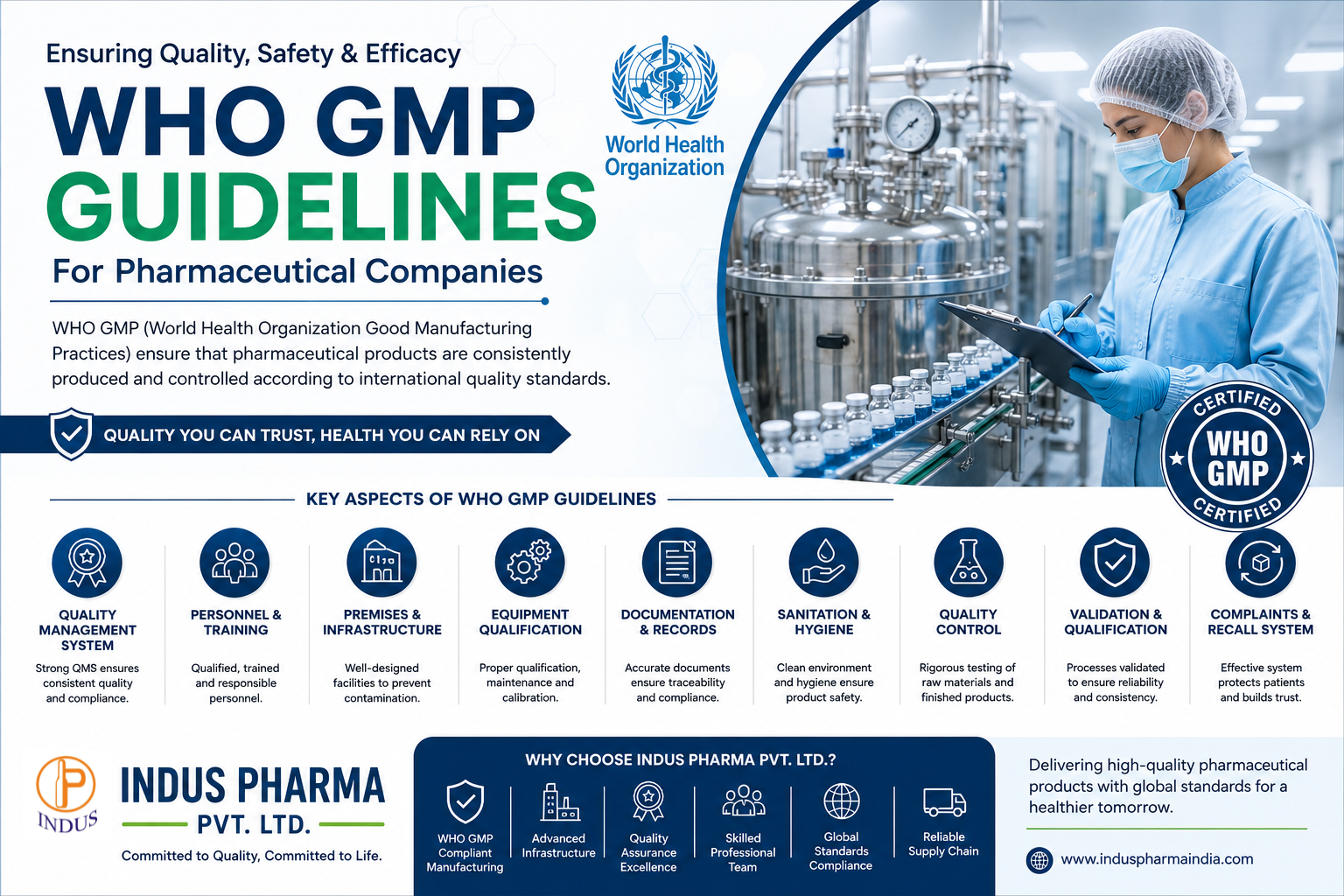
WHO GMP Guidelines ensure that pharmaceutical products are consistently produced and controlled according to international quality standards. These guidelines help pharmaceutical manufacturers maintain product safety, efficacy, purity, and consistency.
Indus Pharma Pvt. Ltd. follows modern pharmaceutical manufacturing practices aligned with global quality standards to deliver reliable healthcare solutions across domestic and international markets.
What is WHO GMP?
WHO GMP stands for World Health Organization – Good Manufacturing Practices. These are internationally recognized guidelines designed to ensure pharmaceutical products are manufactured under controlled conditions.
WHO GMP focuses on:
- Product quality
- Safety standards
- Manufacturing consistency
- Hygiene and sanitation
- Documentation systems
- Quality assurance
- Risk management
- Validation processes
Pharmaceutical companies following WHO GMP standards gain higher credibility in international pharmaceutical markets and improve export opportunities globally.
Importance of WHO GMP Certification in Pharma Industry
WHO GMP certification is extremely important for pharmaceutical manufacturing companies because it demonstrates commitment to quality and regulatory compliance.
Key Benefits of WHO GMP Compliance
1. Ensures Product Safety
WHO GMP guidelines help prevent contamination, mix-ups, and manufacturing errors.
2. Improves International Market Access
Many countries prefer or require WHO GMP-certified pharmaceutical suppliers for imports.
3. Enhances Brand Reputation
WHO GMP-certified companies are trusted by healthcare professionals, distributors, and regulatory authorities.
4. Maintains Product Consistency
Every batch of pharmaceutical products is manufactured with standardized quality.
5. Reduces Risk of Product Recalls
Strict quality control minimizes manufacturing defects and compliance issues.
Major WHO GMP Guidelines for Pharmaceutical Companies
1. Quality Management System (QMS)
A strong Quality Management System is the foundation of WHO GMP compliance. Pharmaceutical companies must establish clear quality policies and procedures.
QMS Includes:
- Standard Operating Procedures (SOPs)
- Deviation management
- Corrective and Preventive Actions (CAPA)
- Risk assessment
- Change control systems
- Internal audits
At Indus Pharma Pvt. Ltd., quality-focused pharmaceutical manufacturing processes help maintain consistency and reliability in every stage of production.
2. Personnel and Training
WHO GMP emphasizes that employees involved in pharmaceutical manufacturing must be properly trained and qualified.
Important Requirements:
- Regular GMP training
- Hygiene awareness
- Protective clothing
- Technical competency
- Controlled entry into production areas
Qualified personnel reduce operational errors and improve manufacturing efficiency.
3. Pharmaceutical Premises and Infrastructure
The manufacturing facility must be designed to minimize contamination and ensure smooth operations.
WHO GMP Infrastructure Standards:
- Cleanroom systems
- Controlled temperature and humidity
- Air handling systems (HVAC)
- Proper material flow
- Segregated production areas
- Water purification systems
Modern pharmaceutical infrastructure supports contamination-free manufacturing processes.
4. Equipment Qualification and Maintenance
Pharmaceutical manufacturing equipment must be suitable, calibrated, and maintained regularly.
Equipment Requirements:
- Installation Qualification (IQ)
- Operational Qualification (OQ)
- Performance Qualification (PQ)
- Preventive maintenance
- Calibration records
- Cleaning validation
Properly maintained equipment ensures accurate and reliable production results.
5. Documentation and Record Keeping
Documentation is one of the most critical aspects of WHO GMP compliance.
Essential GMP Documents:
- Batch Manufacturing Records (BMR)
- Batch Packaging Records (BPR)
- SOPs
- Validation protocols
- Analytical reports
- Equipment logs
- Cleaning records
Good documentation practices improve traceability and regulatory compliance.
6. Sanitation and Hygiene
Maintaining hygiene is essential in pharmaceutical manufacturing facilities.
WHO GMP Hygiene Standards:
- Clean production environments
- Personnel hygiene protocols
- Sanitization schedules
- Pest control systems
- Waste disposal management
These practices help prevent microbial contamination and maintain product quality.
7. Quality Control Laboratory
WHO GMP requires pharmaceutical companies to establish effective quality control systems.
QC Laboratory Responsibilities:
- Raw material testing
- In-process testing
- Finished product testing
- Stability studies
- Microbiological testing
Quality Control ensures medicines meet predefined specifications before market release.
8. Validation and Qualification
Validation proves that pharmaceutical processes consistently deliver expected results.
Types of Validation:
- Process validation
- Cleaning validation
- Method validation
- Computer system validation
- HVAC validation
Validation improves manufacturing reliability and regulatory acceptance.
9. Complaints and Product Recall System
WHO GMP requires pharmaceutical companies to establish a recall and complaint management system.
Recall System Includes:
- Complaint investigation
- Root cause analysis
- Product traceability
- Recall procedures
- CAPA implementation
Efficient recall systems protect patient safety and maintain company credibility.
WHO GMP and Pharmaceutical Exports
WHO GMP certification is highly valuable for pharmaceutical export companies. International buyers prefer manufacturers with strong quality systems and regulatory compliance.
India has become a major global pharmaceutical manufacturing hub because many Indian pharma companies follow WHO GMP guidelines.
Indus Pharma Pvt. Ltd. focuses on delivering quality pharmaceutical products while maintaining high manufacturing standards suitable for global healthcare markets.